


Table of Contents
Starting a law firm is a major business decision that needs much forethought. One of the most important questions to answer is this: Which law firm partnership structure will you decide on? There are many options to choose from, with LLP (limited liability partnership), PC (professional corporation), and LLC (limited liability company) structuring being three of the most common. Each of these is a distinct legal entity, offering different levels of personal liability protection, formation processes, and tax implications. If you are still asking yourself, “What does LLP mean?” or “What is the difference between PC and LLC law firms?” then you should prepare to do some extensive research. The information detailed below will help you gain a strong understanding of your formation options, the liability protection each offers, and their implications for your future law firm.
What Does LLP Mean?
LLP stands for limited liability partnership. It is a structuring option that creates a type of partnership and results in limited liability protection for one or more partners in most cases. This means that partners' personal assets are generally protected from business debts and claims. LLP liability protection differs from state to state. In some jurisdictions, LLP protection is more extensive for partners than in others. Additionally, some states only allow certain professionals to form LLPs, such as attorneys and physicians.
Law Firm LLP vs. Limited Liability Company (LLC): A Comparison
An LLC can provide limited liability for business obligations, subject to state professional-entity rules and exceptions for a lawyer’s own malpractice. For federal tax purposes, an LLC may be treated as a disregarded entity, partnership, C corporation, or eligible S corporation depending on ownership and elections. An LLC has members, whereas an LLP has partners. Both structuring options limit partners’ or members’ liability related to the business. However, the structuring of limited liability companies is the most comprehensive of the two, generally speaking.
| Liability Protection | LLC and LLP: Taxation | LLP vs. LLC: Management Structure |
|---|---|---|
| The liability protection available to an LLC, PLLC, or LLP depends on state law, the type of claim, guarantees, and professional-malpractice rules. Compare the statutes and bar requirements in the state where the firm will practice. Points to keep in mind when deciding between the two include: - LLCs usually protect members from business obligations and business negligence. - LLP attorney protection varies from state to state. - Some states require one member of the LLP to have unlimited liability. - Some states do not protect LLP partners from liability stemming from business obligations — only from liability arising from negligence. | When it comes to taxation, LLCs give you more options than LLPs. With an LLC, you have multiple taxation options, including: - Sole proprietorship - A partnership - S-corporation - C-corporation A domestic multi-member LLP is generally taxed as a partnership by default for federal purposes, but an eligible entity may elect corporate classification. State tax treatment and filing obligations vary. Multi-member LLCs and LLPs are generally pass-through entities by default for federal income tax purposes. An eligible LLC or LLP may elect corporate taxation, and state-level entity taxes or fees may still apply. | LLCs have the most flexibility when it comes to management structure. Management structure considerations include: - LLPs must have at least two partners. - LLCs do not need more than one member. - LLCs can be structured as management LLCs with passive owners. - LLP structuring is determined by a partnership agreement. |
What Is a Professional Corporation (PC)?
A professional corporation (PC) is a business entity that is established to provide professional services to others. PCs are governed by state law, which makes it important to know the rules of your jurisdiction when forming one. The laws can vary wildly from state to state; so can the tax consequences.
Professional corporations are more formal entities than other formations. They must have bylaws and typically require the approval of a board of directors and or shareholders to make decisions for the company. The bylaws of the professional corporation will dictate the decision-making process, among other things, as well as the scope of the activities the corporation will be engaged in.

Pros
- Retirement-plan contribution limits depend on the plan design, compensation, tax rules, and participant status—not simply on choosing a professional corporation.
- Tax-free employee benefits
- Potential tax planning options, depending on compensation, elections, state taxes, payroll obligations, and the firm’s financial circumstances
- Easy-to-transfer ownership
- Potential to continue in perpetuity after owner's death
- Easy addition or removal of shareholders
Cons
- No personal liability protection for individual malpractice
- Double-taxation risk
- Not all professionals can form a professional corporation
- No professional corporation ownership for shareholders of differing professions
Only certain professionals can form a professional corporation. Each state maintains a list of qualified professionals who are permitted to form these types of business structures, but these lists typically include the following:
- Engineers
- Lawyers
- Medical doctors
- Veterinarians
- Accountants
Law Firm PC vs. LLC: A Comparison
| Eligibility | State Rules and Regulations | Tax Considerations |
|---|---|---|
| LLC eligibility and ownership rules vary by state and profession. Lawyers may need to form a professional LLC or another approved entity and comply with bar ownership and naming requirements. However, the formation of a PC requires the filer(s) to possess a professional license, such as a license to practice law or medicine. | State laws govern LLCs and PCs, which means it is important to understand the rules of the jurisdiction you wish to form them in. In some jurisdictions, you may be barred from forming a law firm in one manner but permitted to do so in another jurisdiction. Massachusetts permits single-member LLCs. Lawyers must still comply with the state’s professional-entity, registration, ownership, and professional-responsibility requirements. In some states, the PC, LLP, or LLC status of a particular business might not be recognized. As such, the entity will have to register as an out-of-state business. All structures allow members of these entities to limit their liability for business debts owed by the company. | Both PCs and LLCs provide limited liability protection, meaning that the owners' personal assets are generally protected from business debts and claims. Tax advantages and disadvantages exist for both PCs and LLCs, depending on which state you will be operating in. PC law firm taxation is based on the net profits of the corporation. Owners may be subject to double taxation if they receive after-tax net profits. State tax treatment varies: an LLC may owe income, franchise, gross-receipts, minimum, or annual entity taxes and fees even when income passes through to its owners. Review the rules in every state where the firm does business. Additionally, many states have an annual registration requirement and fee. |
What Is a Professional Limited Liability Company (PLLC)?
A PLLC is a professional limited liability company. This business structure is reserved specifically for licensed professionals. Not every state recognizes this type of limited liability protection, but more do than don't. One of the principal benefits for licensed professionals operating under a professional limited liability company is the financial liability protection they enjoy from other members' actions. However, they are on the hook for their own actions when they cause harm.
Pros
- Owners and members are shielded from business debts but may face personal liability
- Option of pass-through or corporate taxation when it's time to pay income taxes
- Simple to set up
- Costs less than a corporation
- Fewer compliance regulations
Cons
- Not valid in some states
- Only professionals can form this type of business entity
- Self-employment federal and state taxes may come into play
Forming and operating a PLLC is similar to running and operating an LLC and typically provides members with the same tax benefits. Liability protections include protection from business liability and from other members of the business entity, but not from liability due to your own actions.
PLLC and Other Business Types
| PLLC vs. LLP | PLLC vs. PC | PLLC vs. LLC |
|---|---|---|
| PLLCs and LLPs are similar in that they allow professionals to avoid liability created by other members or partners of the entity. Not all states allow LLP attorneys, and they may exclude other professions from forming LLPs. But some do allow attorneys to form their law offices as PLLCs, rather than LLP law firms. Neither is recognized by the IRS for the purpose of taxation. As such, forming a law firm under either of these designations will require you to designate a tax status. | PLLCs and PCs differ in many ways. For example, the management of a PC law firm is controlled by bylaws, boards of directors, and shareholders. Additionally, PCs are taxed differently than PLLCs. PLLCs can opt for pass-through taxation. They may also choose S-corps taxation, which offers a form of pass-through taxation but includes some corporate taxation done at the level of the business. A professional corporation is taxed as a C corporation by default for federal purposes, but it may elect S corporation status if it meets the eligibility requirements. State tax treatment and professional-corporation rules may differ. One of the major differences between PLLCs and PC law firms is the amount of compliance work involved with PCs vs. PLLCs. PCs must maintain stock and stock ledgers, along with a host of other corporate requirements. PLLCs only have an annual filing requirement. | A PLLC is a specialized type of LLC. While anyone can form an LLC, only certain professionals are able to legally form a PLLC. Additionally, not every state offers PLLC formation. Essentially, PLLCs are LLCs for professionals. With a PLLC, professionals can avoid liability for the actions of others; however, they may face liability for their own actions. |
Choosing the Right Entity for Your Law Firm: LLC vs. PC
So what’s right for your law firm, PC vs. LLC? Starting off on the right foot is important. As you have just read, you have multiple options for structuring your venture and should take the time to understand each one and investigate all relevant tax considerations. Doing so will help greatly in the management of your new firm and help you effectively reduce your personal liability. It will also help you avoid double taxation and other potentially negative effects of state and federal tax law. It is crucial to consult with legal professionals before choosing the best legal entity for your business.
If you are considering forming your own law firm, contact Grow Law for more details on entity formation, law firm management, and growth. We are a professional law firm SEO agency with a passion for taking law firms to the next level of growth and profitability.

Compare Your Practice Instantly
Stay Ahead of the Competition!
Compare your law firm's performance to Local competitors with our instant assessment tool
Get a clear picture of your firm's performance
Boost your online presence
Compare My Firm
Compare Your Practice Instantly
Stay Ahead of the Competition!
Compare your law firm's performance to Local competitors with our instant assessment tool
Get a clear picture of your firm's performance
Boost your online presence
Compare My Firm
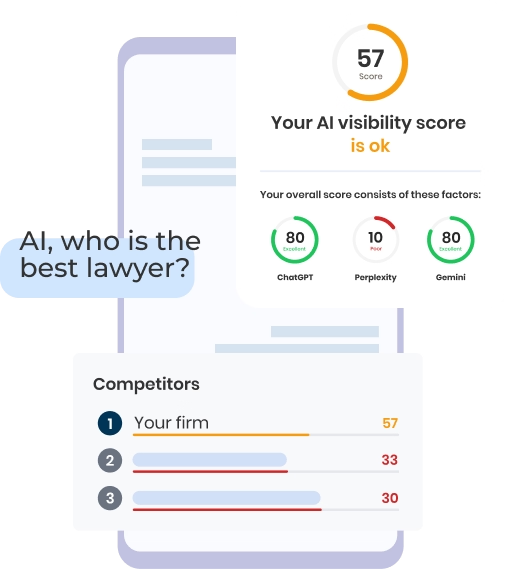
Check Your AI Visibility Instantly
Find Out What AI Is Telling Your Potential Clients
Run our free AI Visibility Report to:
See how often top AI tools mention your law firm
Spot which competitors show up first
Get the next steps to capture more cases
Run My Free AI Report